Choosing a Commercial Cleaning Niche: Evidence and a Scoring Matrix
Which commercial cleaning niche is most profitable? No source we found says. Compare offices, medical, schools and more on seven criteria with a fill-in matrix.

In this article
- Which niche is the most profitable? We found no audited numbers
- What the numbers we can check do say
- Seven things a niche changes
- Niche by niche: what is documented and what is our assessment
- Credentials: what CIMS is and what it does not promise
- The Niche Selection Matrix
- What extra requirements do to a margin
- Test a niche with ten buildings before you commit
- Choosing, and changing your mind
- Sources
Search for the most profitable commercial cleaning niche and you will find tidy lists: this niche pays a certain range a year, that one a higher range, each with an hourly rate attached. The seven pages of that kind that appeared for niche queries when we searched on November 5, 2026 were all published by software vendors, a lead-list seller or franchise companies. The one we re-read for this article, a workforce-software vendor's blog updated in December 2025, says it drew on cleaning blogs, two Reddit communities and BLS data to estimate annual profits and hourly rates. It gives no formula or sample, and it ties no range to a particular source.
That does not make the lists wrong. It means a reader has no way to tell. This article says plainly what can be checked, what cannot, and what each type of building asks of a cleaning company in schedule, training, equipment and rules. It ends with a worksheet, the Niche Selection Matrix, so that an owner can score the options against their own circumstances instead of borrowing someone else's ranking. The matrix is the Journal's own approach. It is a way to organize a decision, not a benchmark, and it has no data behind it beyond what you put in.
This is general education, not legal, safety, insurance or tax advice. Several rules below change with the state, the building and the task, and we point to the agency to ask in each case. Nobody was interviewed, and every dollar figure in the worked examples is an assumption.
Which niche is the most profitable? We found no audited numbers
We found no independent measurement of profit by niche. No government agency publishes margins for medical-office cleaning against retail cleaning. We found no trade-association study that splits results that way either, though we could not open every member-only report. What exists is opinion, some of it informed, and vendor marketing.
So this article does not rank niches by profit, and any ranking that appears to answer the question should be read with that in mind. What a ranking can legitimately rest on is narrower: how much a niche asks of you before the first shift, how predictable its revenue is, how many buildings of that kind you can reach, and how crowded the field looks where you live. Those can be examined, and the examination is the useful part of the work.
Profit also belongs to a contract, and a category only describes the customer. A medical office won at a price that ignores its training and supervision needs can earn less than an ordinary office priced well. The useful question is which niche you can serve at a price that covers its real costs.
What the numbers we can check do say
Two kinds of figures are reliable enough to use, and both are narrower than they first look.
The U.S. Bureau of Labor Statistics (BLS) reports where janitors and building cleaners are employed. Of about 2.4 million such jobs in 2025, 35 percent were in services to buildings and dwellings, which is where contract cleaners sit. Educational services held 17 percent, healthcare and social assistance 7 percent, government (excluding state and local education and hospitals) 5 percent, and 5 percent were self-employed (BLS, page last modified August 27, 2026). These are counts of people who do the work, including those employed directly by schools and hospitals. They are not revenue, they are not profit, and they do not show how much of the school or hospital work is contracted out. The same page notes that because office buildings are often cleaned while empty, many cleaners work evenings, and that hospitals needing round-the-clock upkeep use shifts that can include nights, weekends or holidays. A schedule is part of what a niche costs you.
The second kind is trade-association opinion on costs and margins, and here the sources disagree. In an article for the Building Service Contractors Association International (BSCAI), the trade association for contract cleaners, David Murphy writes that labor is typically the largest expense in a commercial cleaning bid, roughly 50 to 80 percent of the price, that margins can vary anywhere from about 8 to 30 percent depending on contract size and other factors, and that large, high-profile jobs often attract more competition and may pull margins down while smaller or more specialized contracts may allow higher ones (BSCAI, March 12, 2025). In a July 2026 piece in the same magazine, Adam Povlitz, chief executive of Anago Cleaning Systems, describes labor as frequently consuming 50 to 80 percent of a standard commercial contract (attributing that figure to BSCAI benchmarks and linking the earlier article, so it is not independent confirmation) and says net profit margins typically hover around 6 to 12 percent for large commercial janitorial contracts, without naming a source for the margin figure (BSCAI, July 7, 2026).
The two ranges overlap but do not match, and the articles do not define margin the same way. Each is one author's statement in a trade magazine. Neither is a measured industry average, and neither covers specialized niches. The one claim that points toward a niche decision, that specialized contracts may allow higher margins, is a possibility the author raises. It is not a finding. Our starting guide discusses the 8 to 30 percent range in the context of pricing, and the Journal's pricing article covers how to price commercial cleaning jobs.
Seven things a niche changes
If profit cannot be compared, the comparison has to be made on things that can be observed. The Journal's approach uses seven criteria. Each is rated from 1 to 5 where 5 is always better for you, so a high number never means "harder".
| Criterion | A 5 means | A 1 means | Evidence to look for |
|---|---|---|---|
| Buyer access | Many buildings of this kind nearby, and the decision-maker is easy to identify | Few buildings, or the decision is made out of reach | Your own list of ten buildings and who pays for cleaning in each |
| Operating complexity | Simple, repeatable tasks | Many task types and special procedures | Your written task list for a typical site |
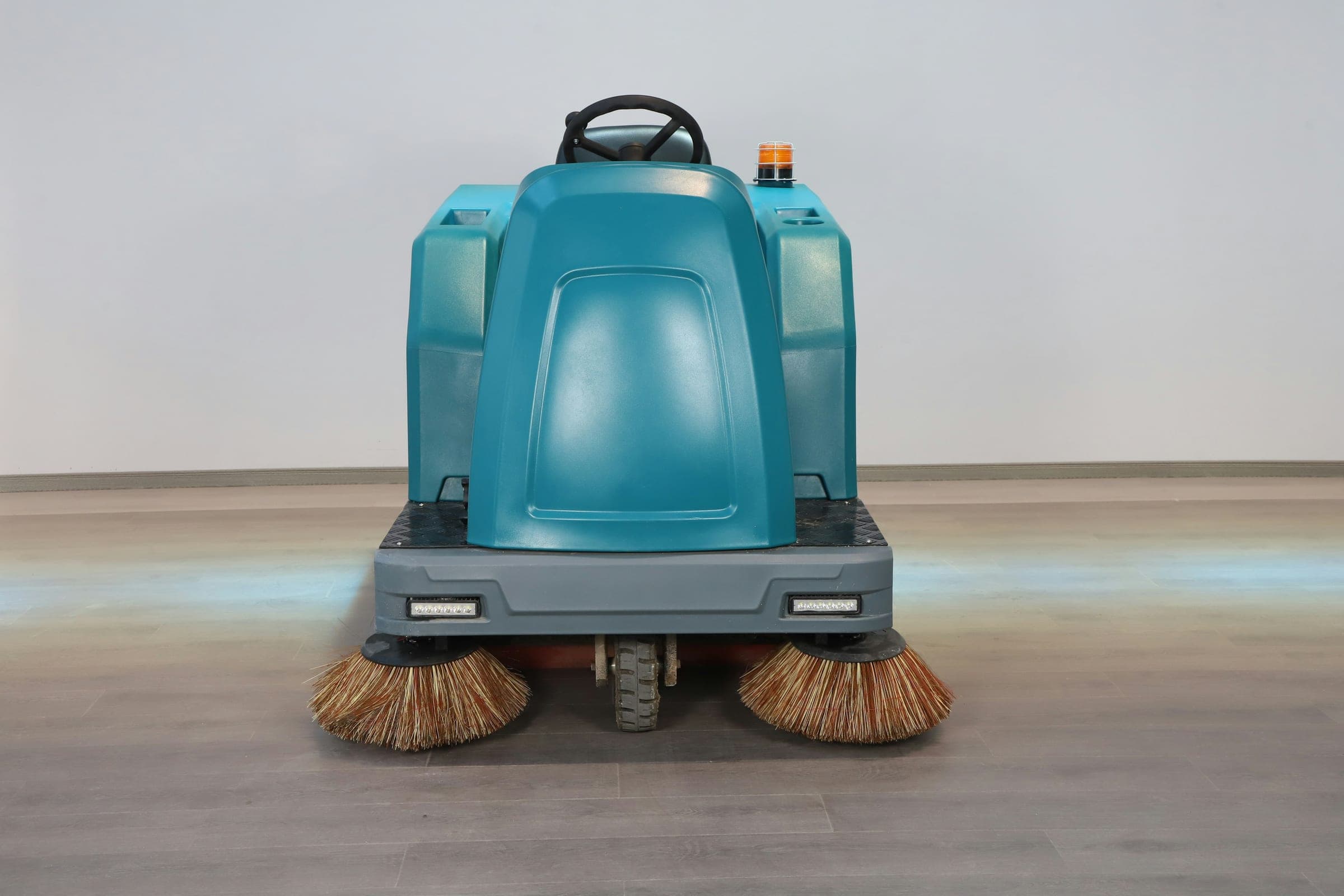
| Equipment | Hand tools and machines you already own | Specialized machines you would have to buy or rent | An actual equipment quote |
| Training | Little beyond chemical-safety basics | Setting-specific training needed before the first shift | The regulator and guidance pages below |
| Compliance exposure | Few setting-specific rules | Rules that change how and where you clean, with paperwork | OSHA, EPA, CDC and state pages |
| Competition | Few strong rivals, and an easy way to be different | Crowded, or dominated by large firms | A count of the rivals who answer a local search |
| Revenue pattern | Recurring and predictable | One-off and lumpy | Whether the work is a recurring contract or a project |
Buyer access and competition depend on where you live, so no article can score them for you.
Niche by niche: what is documented and what is our assessment
Each statement below carries a status. "Law" means a statute or regulation. "Interpretation" means an agency explaining how it reads a rule, which is useful and not itself the rule. "Guidance" means a recommendation that is voluntary for a cleaning company unless a contract makes it a requirement. "Our assessment" is judgment without a source.
General offices
Offices carry the lightest setting-specific load we could find. The chemical-safety rule that applies everywhere still applies: OSHA's Hazard Communication standard covers all employers with hazardous chemicals in their workplaces, who must provide labels and safety data sheets for exposed workers and train them to handle the chemicals appropriately (OSHA). In our assessment a light requirement load also means low barriers for rivals, so competition is something to measure locally, not assume.
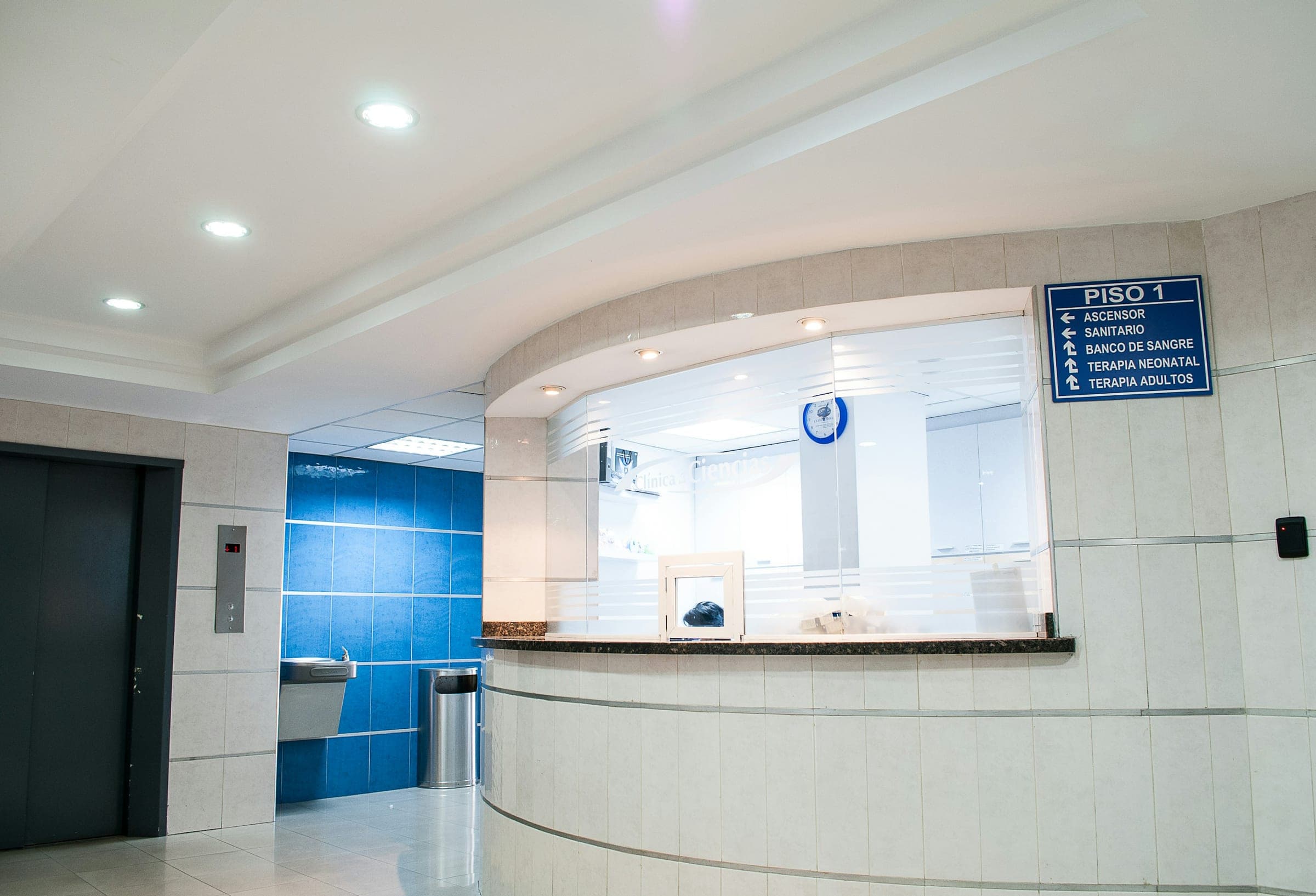
Medical and dental offices
The medical niche is where the rules we found depend most on the task, and an honest answer starts there. OSHA's bloodborne pathogens page says that housekeeping personnel in some industries may be at risk, and that an employer must implement an exposure control plan covering protective measures, training, medical surveillance and hepatitis B vaccination (OSHA). OSHA's own frequently-asked-questions document explains how that applies to cleaners. Housekeeping workers in healthcare facilities may have occupational exposure, particularly when cleaning blood spills or handling regulated waste. In non-healthcare facilities OSHA does not generally consider all maintenance and janitorial staff to have occupational exposure. In either setting, the employer must determine which job classifications or specific tasks involve exposure (OSHA interpretation). That FAQ is OSHA's interpretation and not the standard's text, and it is an older document: its web address carries the date 1993-02-01, and the page notes a correction dated November 1, 2011.
Two conclusions follow, and both are narrower than the headlines suggest. A cleaning contractor should not assume that every janitorial employee is covered by the standard, and should not assume that none are. Coverage follows the work. A crew that empties waste baskets and mops hallways is in a different position from one that is contractually responsible for a practice's regulated waste or for cleaning up blood, and the contract, not a niche label, decides which of those you are. If you take medical accounts, ask OSHA or your state program how the standard applies to your tasks before the first shift. Some states run their own OSHA-approved programs, and we did not research how they differ.
CDC guidance sits on top of that. The CDC's environmental-services page is part of its 2003 Guidelines for Environmental Infection Control in Health-Care Facilities, and the page we read was dated January 8, 2024. It says high-touch surfaces should be cleaned or disinfected more often than surfaces with little hand contact, that disinfecting floors offers no advantage over regular detergent and water cleaning, that disinfectant fogging is not recommended in routine patient-care areas, and that workers in patient-care and laboratory areas should receive periodic training in environmental-surface infection control (CDC). CDC's core practices page, dated April 12, 2024, calls for job-specific infection-prevention training for healthcare personnel before they perform their duties and at least annually (CDC). These documents address healthcare facilities and their personnel. They are guidance, and a cleaning contractor is bound by them only to the extent a contract or the practice's own policies say so. Our reading is that a medical practice may well write them into the scope, which is why a proposal should ask.
Dental offices add a useful line to draw. CDC's dental guidance says clinical-contact surfaces such as light handles, unit switches and computer equipment should be barrier-protected or cleaned and disinfected, while housekeeping surfaces such as floors, walls and sinks, which do not touch patients or dental devices, can be cleaned with soap and water, or cleaned and disinfected if visibly contaminated with blood (CDC, May 15, 2024). The page does not say who performs the cleaning. In our assessment a dental contract should state in writing which surfaces the cleaning company touches and which the practice's clinical staff handle, because the answer changes both the training you need and the risk you carry.
Disinfectant products have their own rule. The EPA says the registration number on a product's label is the only reliable way to identify it, that directions on the label set the contact time, that the surface should stay visibly wet for the entire contact time, and that the label says where a product may be used (EPA, updated August 24, 2026). Follow the label for the product in your hand rather than a chart or a competitor's habit.
Gyms and athletic facilities
CDC's guidance on athletic facilities and MRSA, a drug-resistant skin infection, advises cleaning shared equipment after each use and letting it dry, wearing gloves and eye protection when cleaning, and favoring targeted cleaning of surfaces over large-scale disinfecting, since there is little evidence the latter prevents MRSA infections. It names household bleach, detergent-based cleaners and EPA List H products as options (CDC, June 27, 2025). The page is guidance aimed at athletic programs, and nothing in it makes a contractor responsible for between-user cleaning. The practical question is a contract question: who wipes down equipment during the day, the customer's staff or you?
Retail
We found no rule specific to retail cleaning, and we did not search every state. That is a finding about our search, not a statement that none exists. If you are scoring retail, mark compliance as unknown until you have checked with the state and the lease.
Schools
Schools employ 17 percent of the cleaners in the BLS count above, though that count does not show how much school work is contracted out. The EPA's framework for school indoor air quality lists cleaning practices such as high-efficiency vacuums, entrance mats and damp dusting, keeping safety data sheets available to staff, and regular training for facilities and maintenance staff, in a framework that schools use to develop their own programs and that the page does not present as a requirement (EPA, updated February 18, 2026). State rules differ. New York Education Law 409-i directs the state's elementary and secondary schools to follow state guidelines when they identify and buy environmentally sensitive cleaning and maintenance products (NY Senate). The section does not mention contractors, so whether a school passes that requirement down to a vendor is a question for the school. We did not verify other states' laws, and background-check and building-access rules for school work are a separate matter we did not research. Check both with the district before pricing.
Industrial sites
In our assessment factories and warehouses bring heavier equipment and hazards than office work does. OSHA's lockout and tagout page concerns the servicing and maintenance of machines and equipment, requiring procedures and worker training; it does not say whether cleaning around a machine falls inside that scope (OSHA). Ask the customer's safety manager or OSHA, and do not enter a hazard zone untrained on the assumption that cleaning is outside the rule. OSHA's multi-employer citation policy, in effect since December 10, 1999, matters here too. It describes an exposing employer (one whose own employees are exposed to a hazard), a creating employer, a correcting employer and a controlling employer, and either a host or a contractor can fall into one of those roles depending on what each did (OSHA directive CPL 2-0.124).
Post-construction
Post-construction cleaning follows a builder's schedule, so work arrives by project, and in our assessment it needs more specialized equipment than steady janitorial work. OSHA's respirable crystalline silica rule for construction says employers must not allow dry sweeping or dry brushing where it could contribute to silica exposure, unless wet sweeping, HEPA-filtered vacuuming or other methods that minimize exposure are infeasible, and it restricts the use of compressed air for cleaning. The requirements do not apply where exposure will stay below the rule's action level (OSHA). Whether a given cleanup job meets that rule depends on the work, so assess each job, not the niche. The revenue pattern is the sharper difference, and the margin example later in this article shows what it means in arithmetic.
Property-management portfolios
A property manager arranges outside vendors for owners, who may hire them directly or through a management firm, as our article on finding the person who hires cleaning companies covers. A portfolio describes a type of buyer: one relationship can lead to several sites, and in our assessment it often involves an approved-vendor process and more paperwork. That can mean a longer path to the first contract and more repeatable work afterward, but both are our judgment. Score buyer access by whether you can actually reach the people who manage portfolios in your area.
Credentials: what CIMS is and what it does not promise
ISSA, a cleaning-industry association, offers the Cleaning Industry Management Standard, known as CIMS, which ISSA describes as a comprehensive certification for building service contractors and in-house cleaning organizations. As far as we found, no law requires it, so it is a voluntary business credential. ISSA's certification overview describes an assessor as an independent third party that has earned accreditation (ISSA, Certification overview). ISSA's About page says it incorporated hygiene and infection-prevention elements that were originally part of GBAC STAR into the framework, and that earlier Green Building (GB) criteria support alignment with LEED, a green-building rating system (ISSA, About CIMS).
The costs are listed on ISSA's application page, which was dated September 28, 2026 when we read it. It shows a nonrefundable application fee of $500 at the member rate, a certification fee of $1,495 for ISSA members in good standing or $1,995 for non-members, an assessment fee that depends on the complexity of the organization with no dollar amount given, and the assessor's reasonable travel and lodging expenses on top. An initial certification is valid for two years (ISSA, application). Fees change, so check the page itself.
We found no evidence that CIMS wins contracts or raises prices, and this article does not suggest it does. For a small company its use may be to give an owner a structure for the written procedures a sophisticated buyer might ask about. Whether that is worth the cost is a business decision you can price against the contracts you expect to chase.
The Niche Selection Matrix
This is the original resource in this article. It has four stages. The first removes options that cannot work for you now, the second scores the survivors, the third tests whether the result holds up, and the fourth counts what you do not know.
Stage one: knockouts. For each niche you are considering, answer yes or no to three questions. A single no removes that niche for now, regardless of what scoring would say.
- Can you meet the insurance requirements a typical customer in this niche would write into a contract? Ask a licensed insurance agent what that customer type usually asks for, and check your state's rules on workers' compensation, which differ from state to state.
- Can you complete the training the work legally requires before the first shift? For a start, that means chemical-safety training for anyone exposed to hazardous chemicals, and any task-specific training the sections above flag.
- Can you name ten buildings of this kind within a day's drive? The ten-buildings test appears in our starting guide.
Stage two: rate and weight. Rate each surviving niche from 1 to 5 on each criterion from the table above, with 5 always meaning better for you. Assign each criterion a weight, any whole numbers that add up to 100, reflecting what matters to you. A company short on cash might weight equipment heavily. An owner with no evening help might weight operating complexity heavily. For each niche:
score = (sum of weight x rating) / 5
Dividing by 5 puts the result on a 20 to 100 scale: a 5 on every criterion gives 100 x 5 / 5 = 100, and a 1 on every criterion gives 100 x 1 / 5 = 20.
Stage three: stress the result. Change the weights twice and recompute. If the order of niches changes, the data is telling you it cannot choose for you. Do not treat a single set of weights as the answer.
Stage four: count the unknowns. Beside every rating you made without evidence, write "unknown", and count them per niche. A high score with many unknowns is a hypothesis that still needs testing.
Copy the worksheet below into a spreadsheet or print it.
STAGE ONE: KNOCKOUTS (Y or N; one N removes the niche for now)
Niche:                                        A: ______  B: ______  C: ______
1. Can meet typical customer insurance:       ___        ___        ___
2. Can finish required training first:        ___        ___        ___
3. Can name 10 buildings within a day's drive: ___       ___        ___

STAGE TWO: RATINGS (1 to 5, where 5 is better for you) AND WEIGHTS (sum = 100)
Criterion              | Weight | A rating | B rating | C rating | Evidence or "unknown"
Buyer access           | ____   | ____     | ____     | ____     |
Operating complexity   | ____   | ____     | ____     | ____     |
Equipment              | ____   | ____     | ____     | ____     |
Training               | ____   | ____     | ____     | ____     |
Compliance exposure    | ____   | ____     | ____     | ____     |
Competition            | ____   | ____     | ____     | ____     |
Revenue pattern        | ____   | ____     | ____     | ____     |
Weights add up to 100? ____

SCORE = (sum of weight x rating) / 5, one number per niche
Weights set 1 score:   A ____  B ____  C ____
Weights set 2 score:   A ____  B ____  C ____
Weights set 3 score:   A ____  B ____  C ____
Did the order change between sets? ____
Number of "unknown" ratings:  A ____  B ____  C ____

NEXT STEP: run the ten-buildings test on the top one or two niches before committing.
A worked example
The following owner is imaginary, and so are the ratings. They reflect fit for this owner, not the merit of any niche. The owner has two years of general office experience, a second-hand floor burnisher and standard vacuum equipment, and no healthcare or construction background. Weights are 15 for buyer access, 15 for complexity, 10 for equipment, 15 for training, 15 for compliance, 15 for competition and 15 for revenue pattern, which adds up to 100.
| Niche | Access | Complexity | Equipment | Training | Compliance | Competition | Revenue | Unknown ratings |
|---|---|---|---|---|---|---|---|---|
| General office | 4 | 4 | 4 | 4 | 4 | 2 | 5 | 1 |
| Medical office | 3 | 2 | 3 | 2 | 2 | 3 | 5 | 4 |
| Post-construction | 3 | 3 | 2 | 3 | 3 | 3 | 1 | 3 |
The first score is calculated line by line. For the general office: 15 x 4 = 60, 15 x 4 = 60, 10 x 4 = 40, 15 x 4 = 60, 15 x 4 = 60, 15 x 2 = 30 and 15 x 5 = 75, which sum to 385, and 385 / 5 = 77. Medical office: 45 + 30 + 30 + 30 + 30 + 45 + 75 = 285, and 285 / 5 = 57. Post-construction: 45 + 45 + 20 + 45 + 45 + 45 + 15 = 260, and 260 / 5 = 52.
Now the stress test. Weight set 2 puts more on competition and revenue (10, 10, 10, 10, 10, 30, 20). Weight set 3 puts more on complexity, training and compliance (5, 25, 10, 20, 25, 10, 5). Both add up to 100.
| Weights | Office | Medical | Post-construction | Order |
|---|---|---|---|---|
| Set 1: 15, 15, 10, 15, 15, 15, 15 | 77 | 57 | 52 | Office, medical, post-construction |
| Set 2: 10, 10, 10, 10, 10, 30, 20 | 72 | 62 | 50 | Office, medical, post-construction |
| Set 3: 5, 25, 10, 20, 25, 10, 5 | 77 | 48 | 56 | Office, post-construction, medical |
The office stays on top under all three sets, which for this owner reflects the experience and equipment they already have. Medical and post-construction trade places depending on whether the owner cares more about recurring revenue or about training and compliance load. That swap is the instructive part. The choice between those two depends on what the owner values, and no score settles it. The unknowns column adds a second caution: the medical row rests on four ratings the owner could not support with evidence, so its score is a guess with a number attached.
What extra requirements do to a margin
Specialized work usually costs more to do properly. The arithmetic below is a single contract with invented figures, and it is meant to show the mechanism. It does not claim that medical work costs any particular amount more.
Assume a monthly price of $4,000, with labor at 62 percent of price, supplies and equipment at 6 percent and overhead at 20 percent. The 12 percent margin that results is the top of the 6 to 12 percent range one BSCAI author gave for large contracts, chosen here for round numbers.
| Line | Calculation | Per month |
|---|---|---|
| Price | Assumed | $4,000 |
| Labor | 0.62 x 4,000 | $2,480 |
| Supplies and equipment | 0.06 x 4,000 | $240 |
| Overhead | 0.20 x 4,000 | $800 |
| Total cost | 2,480 + 240 + 800 | $3,520 |
| Margin | 4,000 - 3,520 = 480; 480 / 4,000 | 12.0 percent |
Now add three costs a specialized setting might bring, each an assumption: $100 a month for extra protective equipment and disinfectant, 6 hours of added supervisor inspection at $30 an hour ($180 a month), and 8 hours of additional annual training for 3 cleaners at $18 an hour (8 x 3 x 18 = $432 a year, which is $36 a month). Added cost is 100 + 180 + 36 = $316 a month.
At the same $4,000 price, margin falls to 4,000 - 3,836 = $164, or 4.1 percent. To restore a 12 percent margin, the price must satisfy price x (1 - 0.12) = total cost, so price = 3,836 / 0.88 = $4,359.09. That is an increase of $359.09, or 8.98 percent, about 9 percent. The training hours, wages and supervision time are invented. Your real figures come from your own costs, which is why the pricing work should come after the niche is chosen and why the bid calculator exists. Setting-specific requirements are costs, and a niche pays only if its customers will cover them.
The revenue pattern shifts the arithmetic differently. A recurring contract at $4,000 a month brings in 12 x 4,000 = $48,000 a year. A post-construction project priced at $6,000 would need 48,000 / 6,000 = 8 projects a year to match it, before counting the unpaid time spent winning each one. These prices are illustrative and not market rates. Project work asks you to keep selling continuously, which belongs in the revenue pattern rating.
Test a niche with ten buildings before you commit
Scoring tells you where to look. A two-week test tells you whether the niche exists in your area in a form you can reach.
List ten buildings of the kind you are considering within a day's drive. For each, spend a few minutes working out who pays for cleaning, using the steps in how to find the person who hires cleaning companies, and write down "no name found" where that is the result. Count how many have a named decision-maker. Then ask two or three of them one question: what would they need from a new cleaning company before it could bid, for example certificates of insurance, references or training records. Their answers are better evidence for your training and compliance ratings than a general article like this one. The prospecting templates have wording for the first message, and each reply should resolve one of your unknown ratings or add a new one.
Good Loux, which publishes this Journal, makes software that can help with the first part of that test. It finds businesses in your area, researches the people who may decide, and says when it could not find a name. It does not tell you which niche is profitable and does not promise contacts or contracts. A spreadsheet and a phone are enough for ten buildings.
Choosing, and changing your mind
An owner does not need to pick a niche forever. Pick one or two that pass the knockouts, test them, price your first contracts from your own costs, and revisit the matrix once you have numbers from real accounts. Replace the invented ratings with the margins you actually earn and the hours the work actually takes, and the matrix becomes a record of what you have learned. Our article on commercial cleaning contracts and service agreements covers the scope, insurance and exclusions that decide who carries a niche's requirements, and it is worth reading before the first proposal.
Sources
We read these pages directly on November 5, 2026, and checked each figure against the page itself. Pages change, so check the originals. BSCAI and ISSA are trade associations; the BSCAI pieces are cited as the authors' statements, not as measured averages.
- U.S. Bureau of Labor Statistics: Janitors and Building Cleaners for employment, employment by industry and schedules (page last modified August 27, 2026).
- OSHA: Hazard Communication and Bloodborne Pathogens and Needlestick Prevention.
- OSHA: Most frequently asked questions concerning the bloodborne pathogens standard, an interpretation of the standard (29 CFR 1910.1030), not the standard itself.
- OSHA: Respirable crystalline silica in construction, Control of hazardous energy and multi-employer citation policy, CPL 2-0.124 (effective December 10, 1999).
- CDC guidance: Environmental Services (January 8, 2024), Core Infection Prevention and Control Practices (April 12, 2024), Environmental Surfaces in dental settings (May 15, 2024) and Athletic Facilities: MRSA Prevention and Control (June 27, 2025). All are guidance.
- EPA: Selected EPA-registered disinfectants (updated August 24, 2026) and Framework for Effective School IAQ Management (updated February 18, 2026).
- New York State Senate: Education Law 409-i as an example of one state's school cleaning-product rule.
- BSCAI: David Murphy, Job Costing for Profitable Bids (March 12, 2025), and Adam Povlitz, Commercial Cleaning Unit Economics (July 7, 2026).
- ISSA: About CIMS (May 9, 2025), Certification overview (May 29, 2025) and Certification application (September 28, 2026).
The matrix, the worked examples, the stress test and the judgments marked as ours are not research findings. The ratings, weights, costs and prices in the examples are invented, nobody was interviewed, and no figure here is an industry average. We did not read the full text of 29 CFR 1910.1030 or 1910.1200, state school cleaning laws other than New York's, state OSHA plans, or any state's background-check rules, and we did not find an independent source for profit by niche.